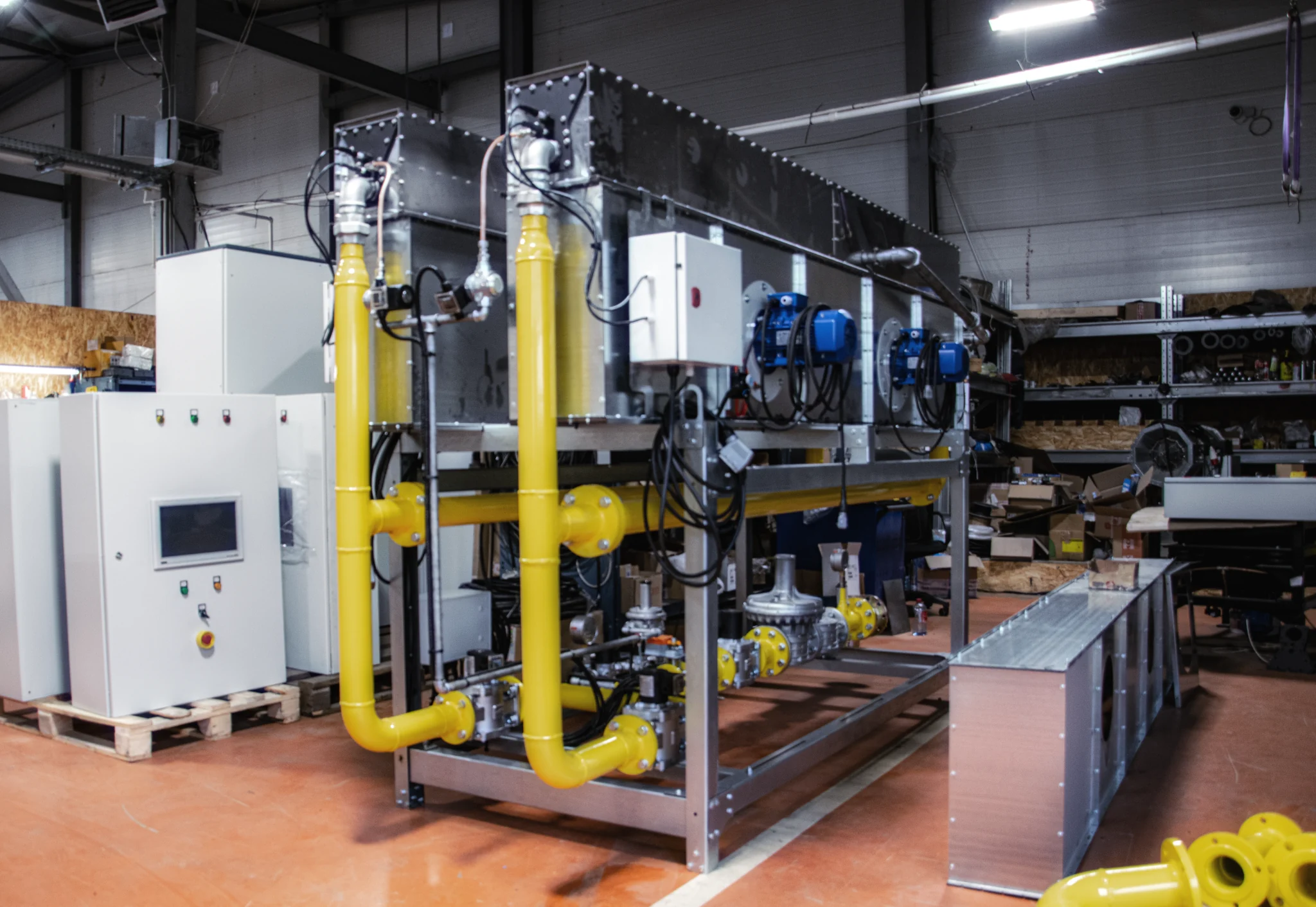
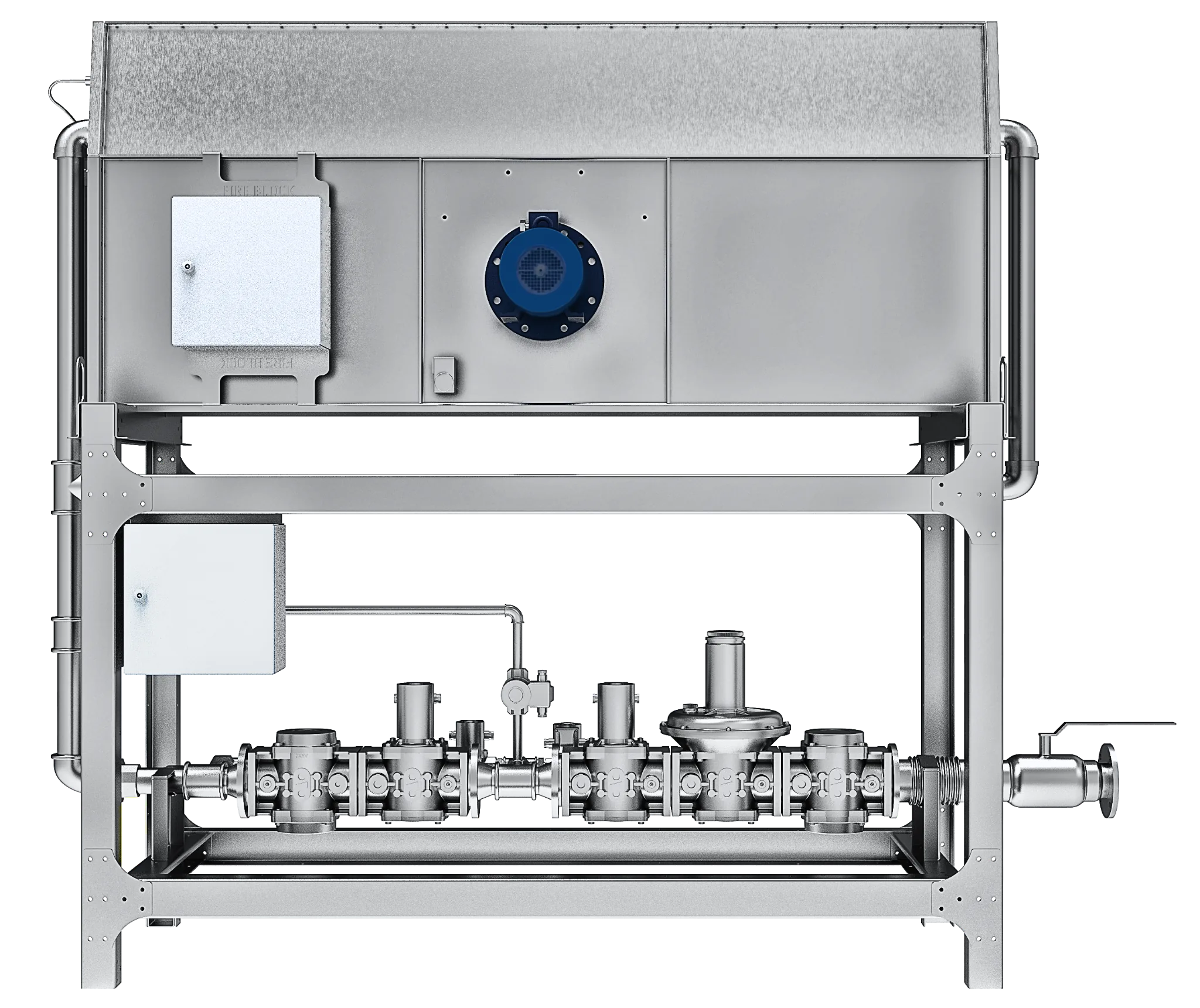
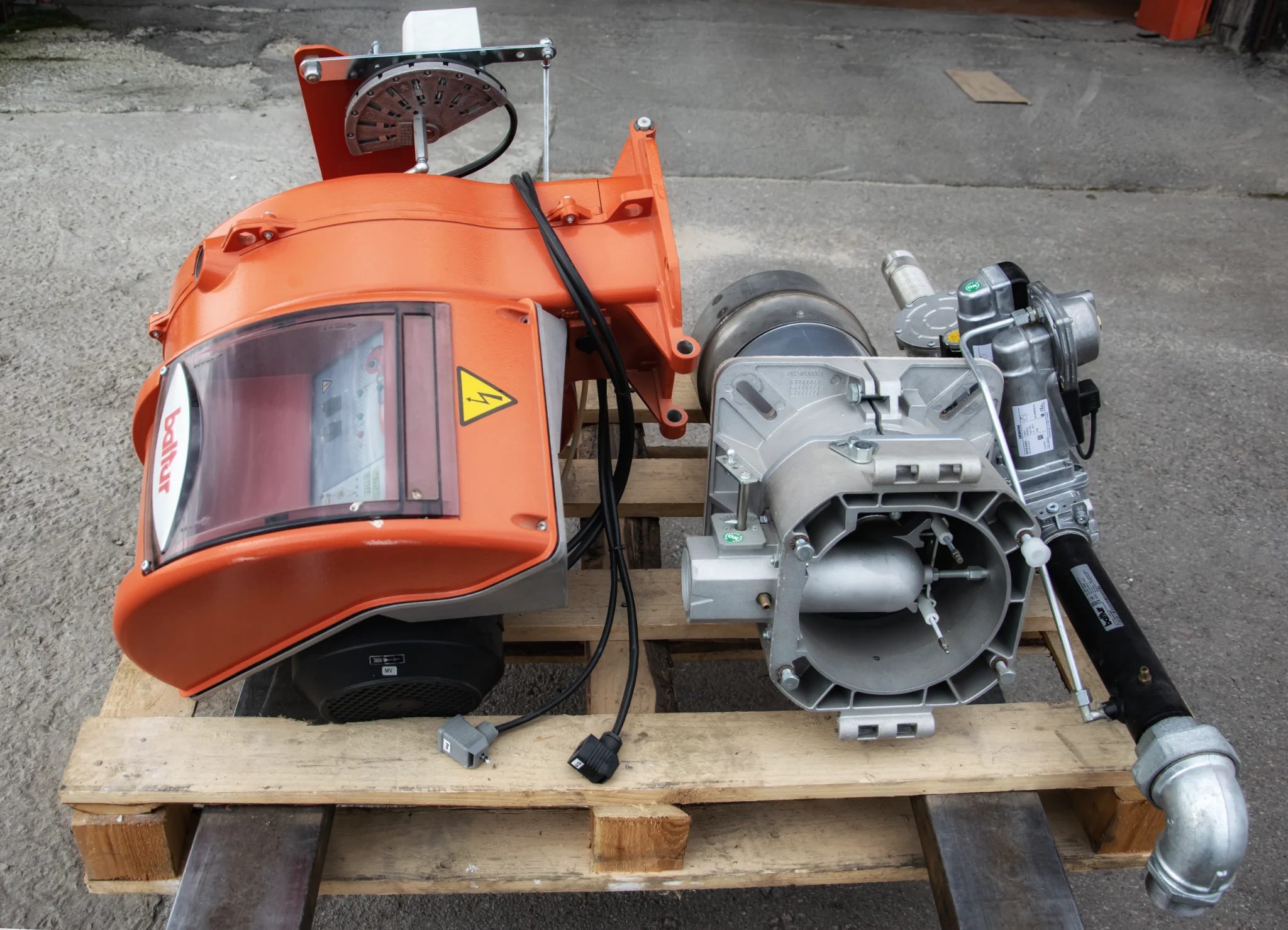
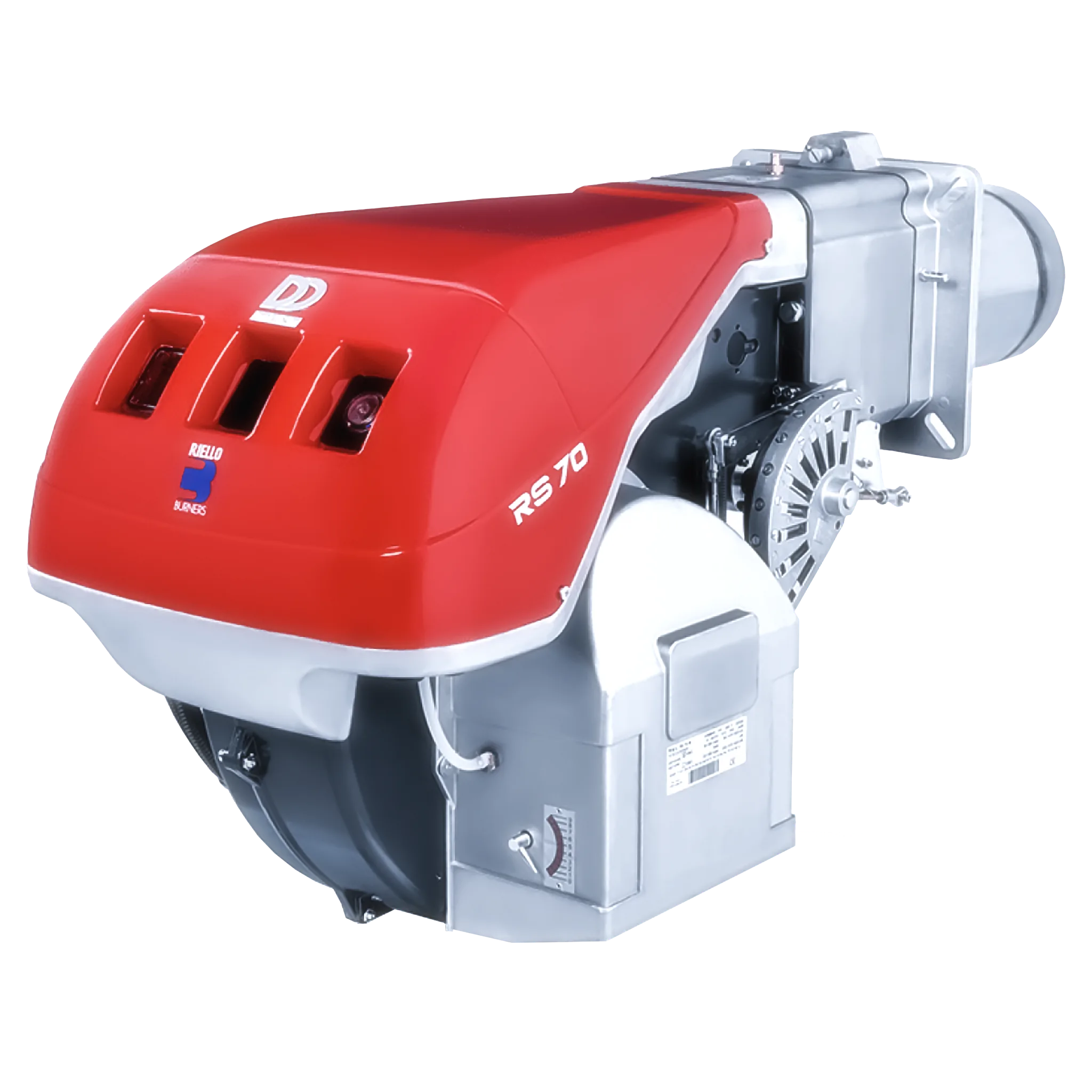
| Rated thermal power, kW | 150–2000 (selected by dryer capacity: approximately 120–150 kW per 1 t/h for wheat) | 50–3000 (wide selection for any capacity, including mobile dryers) |
| Modulation range (max./min.) | 1:10–1:20 (up to 1:30 on twin units) | 1:3–1:5 (rarely up to 1:7) |
| Temperature-field uniformity (coefficient) | 0.94–0.98 (uniform heating across the shaft/channel width) | 0.78–0.85 (requires a mixing chamber and/or recirculation) |
| Drying-agent temperature control accuracy | ±1.5–2.5 °C (suitable for seed lots) | ±4–7 °C (acceptable for feed grain) |
| NOx emissions (natural gas), mg/m³ | 80–120 (low flame-temperature peaks) | 120–180 (higher due to the concentrated flame) |
| Flame length, m | 0.3–1.0 (low-flame, close to the burner plate) | 0.8–3.0 (depends on power; critical for compact furnaces) |
| Mixing-chamber requirements | moderate (a short section with deflectors is sufficient) | high (a developed mixing chamber and/or recirculation is required) |
| Heating-mode compatibility | direct (in the dryer channel) and indirect (through a heat exchanger) | direct (with a mixing chamber) and indirect (through a heat exchanger) |
| Recommended grain category | seed, food, malting, oilseeds | feed, technical grain and grain for processing (where ±1.5–2% moisture non-uniformity is acceptable) |
| Estimated cost (relative) | higher by 15–30% (due to construction and control accuracy) | lower (wide selection of budget models) |